Traditions
The Song
Contenders
Kentucky Oaks
Past Derby Photos
The Infield
Millionares Row
Mint Julep
Garland of Roses
Silks
The Trophy
Twin Spires
Festival
Derby Museum
The Derby is frequently referred to as "The Run for the Roses," because a lush blanket of 554 red roses is awarded to the Kentucky Derby winner each year. The tradition is as a result of New York socialite E. Berry Wall presenting roses to ladies at a post-Derby party in 1883 that was attended by Churchill Downs founder and president, Col. M. Lewis Clark. This gesture is believed to have eventually led Clark to the idea of making the rose the race's official flower. However, it was not until 1896 that any recorded account referred to roses being draped on the Derby winner. The Governor of Kentucky awards the garland and the trophy.
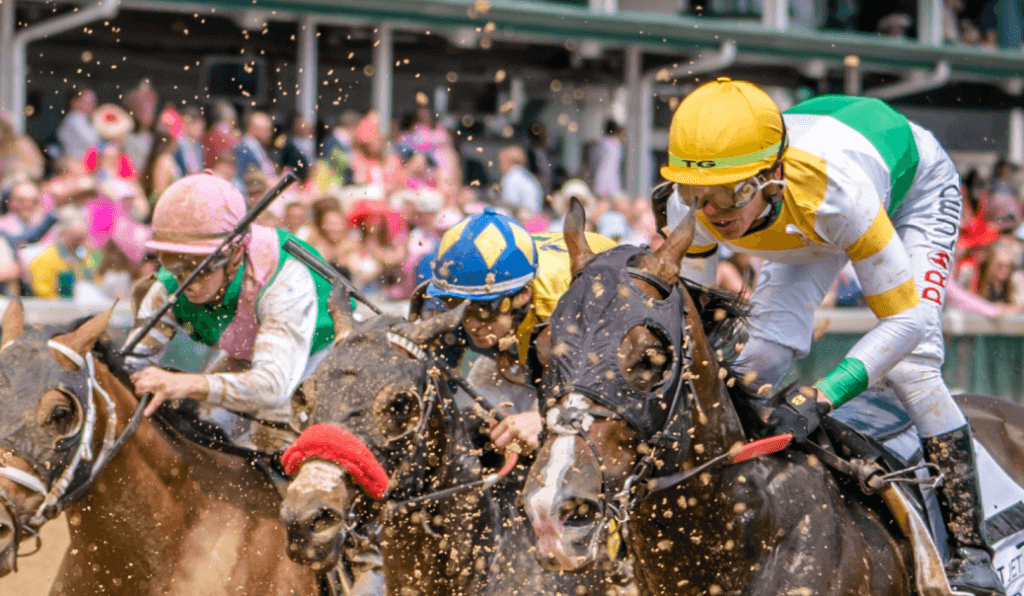
In the world of sports, there is not a more moving moment than the one when the horses step onto the track for the Kentucky Derby post parade and the band strikes up "My Old Kentucky Home."
MY OLD KENTUCKY HOME
The sun shines bright in the old Kentucky home,
Tis summer, the people are gay;
The corn-top's ripe and the meadow's in the bloom
While the birds make music all the day.
The young folks roll on the little cabin floor
All merry, all happy and bright;
By'n by hard times comes a knocking at the door
Then my old Kentucky home, Good-night!
Weep no more my lady. Oh! Weep no more today!
We will sing one song for my old Kentucky home
For the old Kentucky home, far away.
Although there is no definitive history on the playing of the Stephen Foster ballad as a Derby Day tradition it is believed to have originated in 1921 for the 47th running of the classic. The Courier-Journal in their May 8, 1921 edition reported, "To the strains of 'My Old Kentucky Home' Kentuckians gave vent their delight. For Kentucky triumphed in the Derby." The story refers to the popular victory of the Kentucky-owned and bred Behave Yourself.
The actual year the song was played as the horses were led onto the track is also unclear. A 1929 news account written by the legendary Damon Runyon reported that the song was played periodically throughout Derby Day. A report by the former Philadelphia Public Ledger provides evidence that 1930 may have been the first year the song was played as the horses were led to the post parade - "When the horses began to leave the paddock and the song 'My Old Kentucky Home' was coming from the radio, the cheering started."
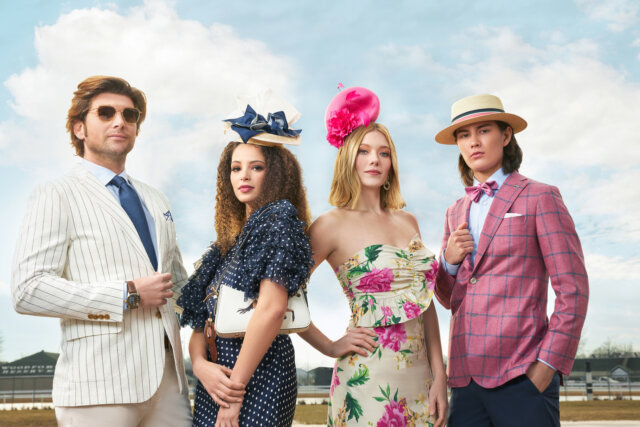
Traditionally, the infield offers two perspectives. The Third Turn Party, where young collegiate-aged rookies and Louisville veterans create the all out crazy party that is the Kentucky Derby Infield. On the opposite end, Turn 1 offers a family-like picnic setting, great for all ages, far different from the Third Turn crowd. In between lies a vast sea of people with their territories roped off, wearing their best derby attire with their beverage of choice in hand. No matter which Derby experience you choose to have, it will certainly be a memorable one.
One of the first celebrity sightings dates to 1877 when famed Polish actress Helena Modjeska attended the third running of the Kentucky Derby. In the 1945 book, Down the Stretch, it was noted that Modjeska was impressed by the Derby but even more charmed by the mint julep to which she was introduced by Churchill Downs founder M. Lewis Clark following the race.
Over the years, a stream of celebrities from film, music, sports, politics and wealth have been drawn to the Derby. On at least one occasion, a celebrity with a more notorious background was the talk of the Derby. The 15th renewal in 1889 brought bank and train robber Frank James to Louisville. The brother of famed outlaw Jesse James and a leader in their outlaw gang, Frank was on hand to watch Spokane take the victory over favored Proctor Knott.
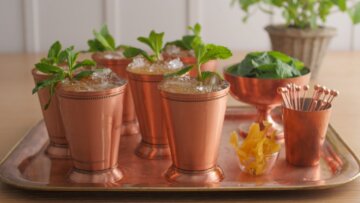
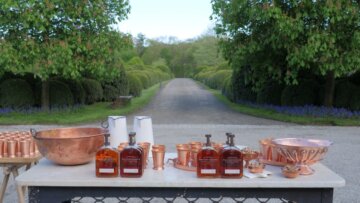
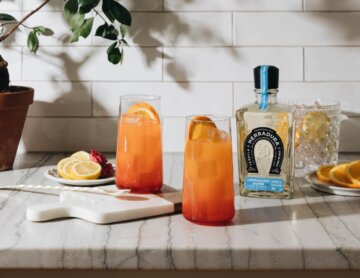
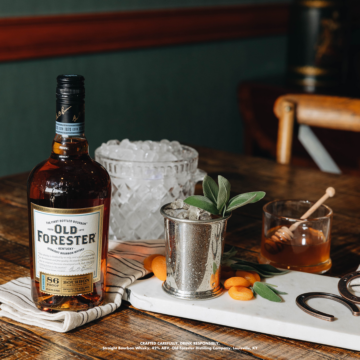
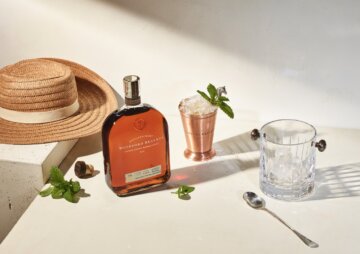
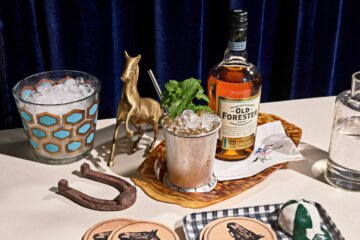
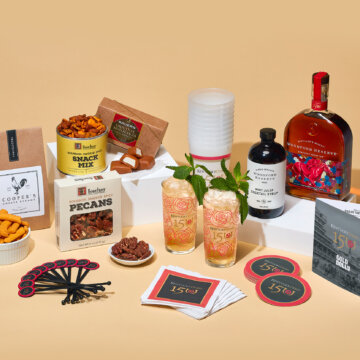
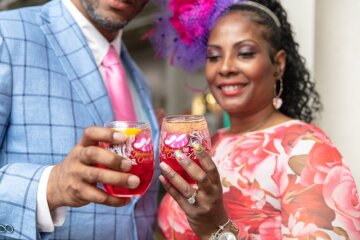
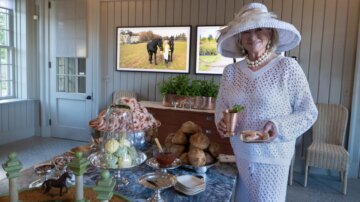
The Mint Julep has been the traditional beverage of Churchill Downs and the Kentucky Derby for nearly a century. Early Times Kentucky Whisky has been privileged and honored to be a part of that tradition. The Early Times Mint Julep Ready-to-Serve Cocktail has been "The Official Mint Julep of the Kentucky Derby" for more than 18 years.
Each year, almost 120,000 Early Times Mint Juleps are served over the two-day period of the Kentucky Oaks and Kentucky Derby. A feat that requires over 10,000 bottles of Early Times Mint Julep Ready-to-Serve Cocktail, 1,000 pounds of freshly harvested mint and 60,000 pounds of ice.
The Early Times Mint Julep Ready-to-Serve Cocktail is a staple at the track the rest of the year as well. In fact, the Grade II Early Times Mint Julep Stakes on June 17 at Churchill Downs is sponsored by Early Times.
You can also find the Early Times Mint Julep Ready-to-Serve Cocktail at your local retailer. The commemorative bottles have become collectors items for many, capturing the mood and spirit of the famous Churchill Downs track and Kentucky Derby race. If the Early Times Ready-to-Serve Cocktail is not available from your local retailer, you can make your own with this time-honored recipe:
The Early Times Mint Julep Recipe
Make a simple syrup by boiling sugar and water together for five minutes. Cool and place in a covered container with six or eight sprigs of fresh mint, then refrigerate overnight. Make one julep at a time by filling a julep cup with crushed ice, adding one tablespoon mint syrup and two ounces of Early Times Kentucky Whisky. Stir rapidly with a spoon to frost the outside of the cup. Garnish with a sprig of fresh mint.
The best times are enjoyed responsibly.
Early Times Distillery Co., Kentucky Whisky. 40% Alc. By Volume. Louisville, KY 2006.
The roses were first established as part of the Derby celebration when they were presented to all the ladies attending a fashionable Louisville Derby party. The roses were such a sensation, that the president of Churchill Downs, Col. Lewis Clark, adopted the rose as the race's official flower. The rose garland now synonymous with the Kentucky Derby first appeared in the 1896 when the winner, Ben Brush, received a floral arrangement of white and pink roses.
In 1904 the red rose became the official flower of the Kentucky Derby. The tradition was strengthened when, in 1925, New York sports columnist Bill Corum, later the president of Churchill Downs, dubbed the Kentucky Derby the "Run for the Roses." The garland as it exists today was first introduced in 1932 for the 58th running won by Burgoo King.
Each year, a garland of more than 400 red roses is sewn into a green satin backing with the seal of the Commonwealth on one end and the twin spires and number of the running on the other. Each garland is also adorned with a "Crown" of roses, green fern and ribbon. The "Crown," a single rose pointing upward in the center of the garland, symbolizes the struggle and heart necessary to reach the winners' circle.
Each year the Governor and other dignitaries present the winning jockey with a bouquet of 60 long stemmed roses wrapped in ten yards of ribbon.
For several years, owners of the Derby winner also received a silk replica of the garland, but since Grindstone's 1996 victory, the actual garland has made the trip to Danville, Kentucky to be freeze-dried. Some owners have even gone as far as to have a flower dipped in silver. A silver dipped flower from the garland of Gato del Sol, the 1982 winner, is on display in the Kentucky Derby Museum.
The Kroger Company has been the official florist of the Kentucky Derby since 1987. After taking over the duties from the Kingsley Walker florist, Kroger began constructing the prestigious garland in one of its local stores for the public to view on Derby Eve.
The preservation of the garland and crowds of spectators watching its construction are a testament to the prestige and mystique of the Garland of Roses.
The average race fan is able to follow a horse's progress through the use of the program, television monitors, the number on the saddlecloth and the track announcer's call.
But when horse racing first began in the early 18th century, there were no such things as program numbers, public address systems or closed circuit television. So when King Charles II first assembled race meets on the plains of Hempstead, the dukes and the barons had trouble figuring out which horse was which. So, they adopted racing silks - or colors - to distinguish their jockeys for easier viewing.
During the time of King Charles II, the silks were simple -- red for one duke, black for another duke, orange for one earl, white for another earl, and so on.
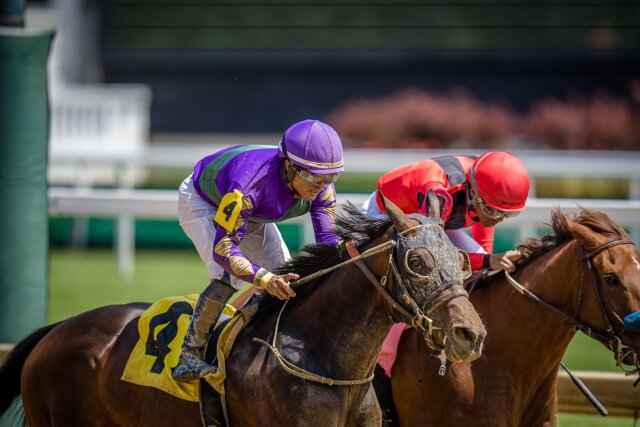
The tradition of the silks remains today as jockeys wear the colors of the horse owners, but because there are so many owners, they have become even more colorful. Some of the most famous silks are the devil's red and blue of Calumet Farm, worn by the jockeys of Kentucky Derby winners Citation and Ponder and Allen Paulson's star-spangled red-white-and-blue colors, carried by the champion racehorse Cigar.
The jockeys' room at Churchill Downs houses hundreds of silks which are hung on pegs in the order of each jockey's races for that day.
Since the 50th running of the Kentucky Derby in 1924, Churchill Downs has annually presented a gold trophy to the winning owner of the famed "Run for the Roses."
History is unclear if a trophy was presented in 1875 to the winner of the first Kentucky Derby, and trophy presentations were sporadically made in following years. Finally, in 1924, legendary Churchill Downs President Matt Winn commissioned that a standard design be developed for the "Golden Anniversary" of the Derby.
Outside of the jeweled embellishments that were added to note special Derby anniversaries in 1949 (75th), 1974 (100th), and 1999 (125th), only one change has been made to the original design. For the 125th Kentucky Derby in 1999, Churchill Downs officials decided to defer to racing lore and change the direction of the decorative horseshoe displayed on the 14-karat gold trophy.
The horseshoe, fashioned from 18-karat gold, had pointed downward on each of the trophies since 1924. To commemorate Derby 125 the change was made and the horseshoe was turned 180 degrees so that its ends pointed up. The trophy now annually incorporates the horseshoe with the ends pointing up. Racing superstition decrees that if the horseshoe is turned down all the luck will run out.
Since 1975 the trophy has been created by New England Sterling located in North Attleboro, MA. The trophy, which is topped by an 18-karat gold horse and rider, includes horseshoe shaped handles, is 22 inches tall and weighs 56 ounces, excluding its jade base. The entire trophy is handcrafted with the exception of the horse and rider that are both cast from a mold.
To complete the trophy by April, craftsmen begin the process during the fall of the previous year and literally work hundreds of hours. The trophy is believed to be the only solid gold trophy that is annually awarded to the winner of a major American sporting event.
Throughout the world, the Twin Spires are a recognized landmark that has become symbolic to Churchill Downs and "the greatest two minutes in sports," the Kentucky Derby.
Constructed in 1895, the Spires were the creation of a twenty-four-year-old draftsman, Joseph Dominic Baldez, who was asked to draw the plans for Churchill Downs' new Grandstand. Originally the plans did not include the Spires, but as the young Baldez continued work on his design, he felt the structure needed something to give it a striking appearance.
Described as towers in the original drawing, the hexagonal spires exemplify late nineteenth century architecture, in which symmetry and balance took precedence over function. Although Baldez designed many other structures in Louisville, the Twin Spires remain as an everlasting monument to the architect.
Former Churchill Downs President Matt J. Winn is reported to have told Baldez, "Joe when you die there's one monument that will never be taken down, the Twin Spires."
Baldez died in 1957, but a century after they were built, his Twin Spires continue to greet the winner of the Kentucky Derby and stand as a familiar beacon to horse racing enthusiasts everywhere.
What started with "two minutes" has since evolved into two weeks. What the "Run for the Roses" is to horse racing, Louisville's Derby Festival is to community celebrations. The Festival is one of the premiere events of its kind in the world. It brings fun, excitement, international recognition and a spirit that is unmatched anywhere. Each Spring nearly 1.5 million people gather to celebrate the unique vitality of the Louisville community.
"We are a community organization of 4,000 volunteers who work all year to provide quality entertainment that brings our entire community together," said Festival Chairman and volunteer Doug Hamilton. Produced annually since 1956, the Derby Festival has become a whirlwind of 70 special events.
The Festival blasts off with the Opening Ceremonies - Thunder Over Louisville, the nation's largest annual fireworks extravaganza! The ensuing weeks of excitement and entertainment promise something for everyone. For sports fans there is basketball, volleyball, football, golf and more. For music lovers the concerts are almost non-stop.
With two-thirds of the Festival events free, families can enjoy numerous just-for-kids activities without stretching their pocketbook. Other highlights include a new full and half Marathon and the Great Balloon Race. The Great Steamboat Race pitting Historic register riverboats is the last of its kind in the world.
From country and rock concerts to the elegant Derby Ball, dance and dress range from frivolous to fancy. The Festival includes several formal affairs, as well a casual, foot-stomping good times. More than just entertaining, the Derby Festival generates over $93 million annually for the local economy. Festival events also raise nearly $300,000 for area charities each year.
The Commonwealth's largest single annual event, and one of Louisville's most popular entertainment attractions, the celebration is produced by Kentucky Derby Festival, Inc., a private, not-for-profit civic organization.
For details on this year's events, visit the Kentucky Derby Festival Web site at
http://www.kdf.org.
The Kentucky Derby Museum is a premier tourist attraction, featuring an award-winning, High Definition Kentucky Derby film entitled "The Greatest Race." Displayed on a 360-degree screen, "The Greatest Race" places the viewer in the center of Derby Day action.
A permanent exhibit features African Americans in Thoroughbred Racing, while interactive exhibits include a "Place Your Bets" exhibit that illustrates pari-mutuel wagering and the "Warner L. Jones, Jr. Time Machine" that permits visitors to select footage of Derbys as far back as 1918. Recent renovations to the museum have made it possible to bring more of the sights and sounds of the track to the facility, affording patrons the luxury to participate in more "hands-on" activities. One can even be a jockey and ride in a race.
Visitors can take guided walking tours of Churchill Downs and the Museum's paddock area (weather permitting). The actual Finish Line pole used at Churchill Down for many years, as well as the grave sites of three famous Kentucky Derby winners, Carry Back (1961), Swaps (1955) and Brokers Tip (1933) are located outside on the museum grounds.
Located on the grounds of the Churchill Downs Racetrack at 700 Central Avenue, Gate #1, the museum is open seven days a week. The gift shop features Derby and Thoroughbred memorabilia and historical books.
The Derby Cafe, located on the Museum grounds, is open for lunch on weekdays.
Museum Hours of Operation
All times Eastern Standard
Monday-Saturday: 9:00 a.m.- 5:00 p.m.
Sunday: Noon-5:00 p.m.
Closed to the public: Thanksgiving, Christmas, Oaks day, Derby day and Breeder's Cup day (when held in Louisville)
For current exhibits and more information, call 502.637.1111 or go to http://www.derbymuseum.org